


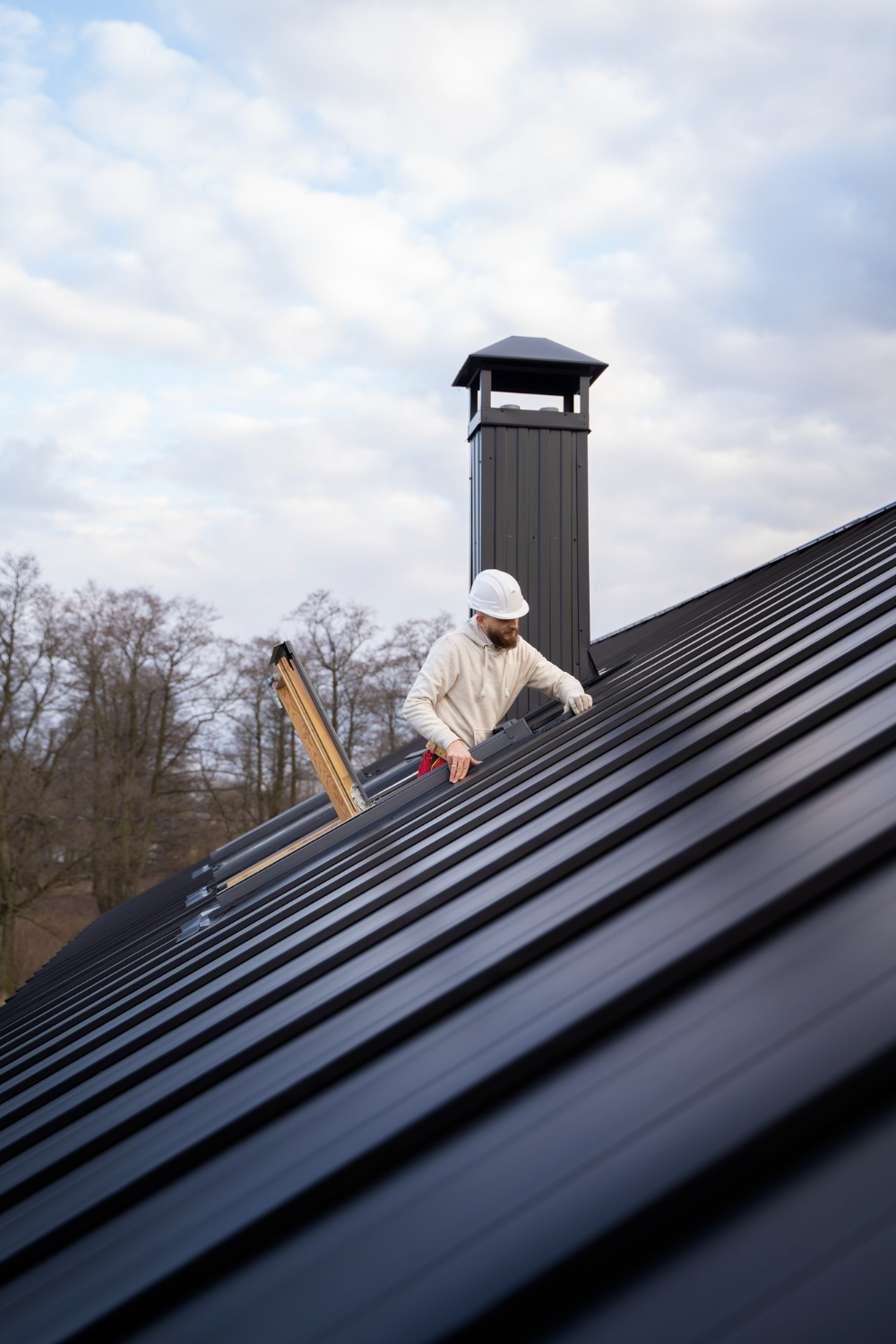
A puncture in your metal roof creates an immediate problem that needs attention. These holes can form when tree branches fall, hail strikes, or workers accidentally damage the surface during repairs or installations. Even a small puncture can let water into your home and cause serious damage over time.
Metal roofs are built to last for decades, but they're not immune to physical damage. When something sharp or heavy hits the roof with enough force, it can pierce through the metal panels. The hole might seem minor at first, but water will find its way through any opening.
Common causes of punctures include:
- Falling tree branches or debris
- Large hail during severe storms
- Foot traffic during maintenance work
- Flying objects in high winds
- Satellite dish or antenna installations
You might notice water stains on your ceiling or walls after a storm. Sometimes you'll see the damage from the ground if the puncture is large enough. The good news is that puncture leaks can be fixed with the right approach and materials.
Acting quickly matters because water damage spreads fast. What starts as a small hole can lead to rotted wood, damaged insulation, and mold growth inside your home. Understanding how to identify and repair these punctures will help you protect your investment and keep your home dry.
Insights into what causes metal roof puncture leaks
Metal roof punctures happen when something breaks through the protective surface layer of your roofing panels. These breaches create direct pathways for water to enter your home, leading to leaks that can cause significant damage if left unaddressed.
Storm damage and falling debris
Severe weather poses one of the biggest threats to your metal roof's integrity. According to the National Weather Service, a thunderstorm is classified as severe when it produces hail measuring 1 inch in diameter or larger, which is the threshold at which roofing materials begin to sustain meaningful impact damage. Wind-driven branches, loose gutters, and other airborne objects can strike your roof with enough force to create holes.
Even after a storm passes, tree limbs weakened by wind may fall onto your roof days or weeks later. Sharp branches can pierce through the metal surface, particularly at vulnerable spots where panels overlap or meet flashing.
Common storm-related puncture sources:
- Hailstones larger than 1 inch in diameter
- Falling tree branches and limbs
- Airborne construction materials
- Blown-off satellite dishes or roof equipment
- Flying debris from neighboring properties
You should inspect your roof after major weather events to catch punctures early before water infiltration causes interior damage.
Foot traffic and maintenance mistakes
Walking on your metal roof without proper precautions can create dents and punctures. Metal panels are not designed to support concentrated weight in certain areas, especially at the center of panels between support beams.
HVAC technicians, satellite installers, and other service workers may accidentally damage your roof while accessing rooftop equipment. Dropped tools, ladders placed incorrectly, or stepping on weak spots can all puncture the metal surface. Common roof problems like these often go unnoticed until interior leaks appear.
Your maintenance activities can also cause problems. Using the wrong type of fasteners, drilling holes for new installations, or accidentally striking the roof with equipment creates openings for water. Even pressure washing at too high a setting can sometimes damage protective coatings and weaken the metal underneath.
Always use walkway pads when accessing your roof and ensure contractors know how to work safely on metal roofing systems.
Aging or weakened roofing panels
Your metal roof naturally becomes more vulnerable to punctures as it ages. Rust and corrosion gradually thin the metal panels, reducing their ability to withstand impacts that they would have easily resisted when new.
The protective coating on metal roofs deteriorates over time due to UV exposure and weather. Once this coating fails, the underlying metal oxidizes and weakens. Corroded areas become brittle and prone to cracking or puncturing under minimal stress.
Fastener holes can enlarge through years of thermal expansion and contraction, creating stress points where panels may tear or develop cracks. Areas around vents, chimneys, and other roof penetrations experience more movement and typically show weakness first.
Panels installed 20 to 30 years ago may use thinner gauge metal than modern standards require, making them more susceptible to punctures from impacts that newer roofs would easily handle.
Identifying signs of a metal roof puncture leak
Puncture leaks create distinct warning signs both on your roof's surface and inside your home. Recognizing these indicators helps you address damage before it worsens.
Visible holes or dents in metal panels
Physical damage to metal panels appears as punctures, dents, or bent areas on the roof surface. These marks typically result from falling tree branches, hail strikes, or tools dropped during maintenance work.
Small punctures may be difficult to spot from ground level. You'll need to inspect the roof closely to find holes smaller than a quarter inch. Larger punctures are more obvious and may have jagged edges around the damaged area.
Dents don't always create immediate leaks but they compromise the panel's integrity. The depression in the metal can collect water and accelerate corrosion. Over time, these dented areas may develop cracks that allow water penetration.
Look for disrupted paint or coating around impact points. The protective finish often chips or flakes away when the metal gets struck. This exposed metal becomes vulnerable to rust and further deterioration.
Interior water stains or ceiling leaks
Water stains on your ceiling or walls indicate active roof penetration. These stains often appear as brown, yellow, or dark patches that spread outward from a central point.
The leak location inside your home may not sit directly below the puncture. Water can travel along roof panels, rafters, or underlayment before dripping into your living space. You might notice wet spots several feet away from the actual roof damage.
Check your attic for moisture during or after rainfall. Fresh water droplets, damp insulation, or wet wood framing confirm an active leak. Musty odors in your attic also signal ongoing water intrusion even when visible stains aren't present.
Rust formation around damaged areas
Rust develops quickly around puncture sites where the metal's protective coating gets compromised. You'll see orange or reddish-brown discoloration spreading from the damaged spot.
The rust pattern typically radiates outward in a circular or irregular shape. Fresh rust appears bright orange, while older corrosion turns darker brown. This color change helps you determine how long the puncture has existed.
Rust weakens the metal and can expand the original hole. The corroded material becomes brittle and may flake away, making the puncture larger. Freeze-thaw cycles accelerate this deterioration in colder climates, as trapped moisture expands and contracts inside compromised areas. Fasteners near the damaged area may also show rust if water has reached them.
Understanding risks of ignoring metal roof puncture damage
A small puncture in your metal roof might seem minor, but water intrusion through even tiny openings leads to significant problems throughout your home. Delaying repairs allows damage to spread beyond the roof surface into structural components and living spaces.
Structural deterioration and spreading leaks
Water entering through a puncture doesn't stay in one spot. It travels along roof panels, seams, and underlying structures before showing up inside your home. This means the visible damage you see on your ceiling might be far from where the actual puncture exists on your roof.
Your roof deck and support beams absorb water over time. Wood components begin to rot and lose their load-bearing capacity. Metal fasteners and connectors corrode when exposed to moisture. This weakening happens gradually but becomes dangerous as structural integrity declines.
The puncture itself grows larger through freeze-thaw cycles. Water enters the hole, freezes when temperatures drop, and expands the opening. Each cycle makes the breach bigger and allows more water inside. What started as a small hole from a fallen branch can become a significant tear within months.
Rust spreads outward from puncture points on metal roofing. Once the protective coating breaks, moisture attacks the exposed metal. The corroded area expands in a circular pattern, creating weak spots that may tear under wind pressure or snow loads.
Insulation and interior water damage
According to the U.S. Department of Energy, the R-value of insulation materials depends directly on type, thickness, density, and moisture accumulation, meaning wet insulation delivers significantly less thermal protection than its rated value. Your heating and cooling costs increase as your HVAC system works harder to maintain comfortable temperatures.
According to the U.S. Environmental Protection Agency, mold will begin growing on wet or damp materials that are not dried within 24 to 48 hours of a leak, and removing the mold without correcting the water source will allow it to return. Attic insulation provides an ideal environment for mold spores to multiply. These colonies spread to wooden framing, drywall, and stored items in your attic space, affecting your family's air quality.
Common interior damage from roof punctures:
- Ceiling stains and discoloration
- Peeling paint and bubbling drywall
- Damaged electrical wiring and fixtures
- Ruined personal belongings in attic storage
- Compromised air quality from mold spores
Your ceiling materials deteriorate as water repeatedly wets them. Drywall becomes soft and crumbles. Plaster cracks and falls away from lath backing. You might need to replace entire ceiling sections rather than just patching small areas.
Increased repair costs over time
A simple puncture repair typically costs between $150 and $400 when addressed quickly. You need a metal patch, sealant, and a few hours of labor. This minor investment protects everything beneath your roof.
Waiting transforms a simple fix into a major project. Replacing rotted roof decking adds $500 to $3,000 to your bill. New insulation costs $1.50 to $3.50 per square foot. Repairing water-damaged ceilings runs $300 to $1,200 per room. Professional mold remediation services charge $1,500 to $3,500 for treatment.
Your entire roof replacement might become necessary if structural damage spreads too far. Metal roof replacement costs $8 to $14 per square foot installed. A 2,000 square foot roof replacement reaches $16,000 to $28,000 compared to a few hundred dollars for immediate puncture repair.
Insurance complications arise when damage results from neglected maintenance. Many policies exclude coverage for problems that developed because you ignored known issues. Your claim might be denied if an adjuster determines the extensive damage came from a small puncture you should have fixed months earlier.
Emergency repairs cost more than scheduled work. Contractors charge premium rates for urgent calls, especially during storms when demand peaks. You pay 25% to 50% more for immediate service compared to planned maintenance.
Professional approaches to repairing metal roof punctures
Professional roofers use specialized techniques and materials to repair punctures based on the size and location of the damage. These methods ensure long-lasting repairs that protect your home from water intrusion and structural problems.
Sealing small punctures with specialized coatings
Small punctures under 1 inch in diameter can often be sealed without replacing entire panels. Professional roofers clean the damaged area thoroughly to remove rust, debris, and old sealant before applying repair materials.
Metal roof sealants come in several types for different applications. Butyl-based sealants work well for most small punctures and provide flexible, waterproof coverage. Polyurethane coatings offer stronger adhesion and UV resistance for exposed areas. Silicone sealants handle extreme temperature changes without cracking or losing their seal.
The repair process involves applying primer to the metal surface first. This helps the sealant bond properly to the roof material. Professionals then apply multiple layers of sealant, allowing each coat to dry completely. They extend the sealant several inches beyond the puncture to create a watertight barrier.
For added protection, some contractors install a reinforcing mesh between sealant layers. This prevents the repair from cracking as the metal expands and contracts with temperature changes.
Replacing damaged metal panels
Larger punctures or panels with multiple holes require complete panel replacement. Professionals remove the damaged section by carefully unfastening it from the roof structure without harming adjacent panels.
The replacement process follows these steps:
- Remove fasteners from the damaged panel and surrounding overlap areas
- Lift out the old panel while checking the underlayment for water damage
- Cut the new panel to match exact dimensions
- Install new underlayment if the old material shows moisture damage
- Secure the replacement panel with appropriate fasteners
- Seal all seams and fastener points
Color matching matters for both function and appearance. Professional metal roofing damage repair services source panels that match your existing roof's profile, gauge, and finish.
Reinforcing vulnerable roof sections
Areas prone to repeated punctures need structural reinforcement beyond basic repairs. Professionals identify weak points like valleys, transitions, and low-slope sections where water pools or debris accumulates.
Reinforcement methods include installing additional purlins underneath thin panels to prevent future dents. Contractors may also add protective barriers over frequently damaged areas, such as walkway pads near HVAC equipment or satellite installations.
Ridge caps and flashing receive special attention during reinforcement work. These areas experience more stress from wind and thermal movement. Professional roof puncture repair services often upgrade these components with heavier gauge metal or additional sealant layers.
Some contractors apply elastomeric roof coatings over entire sections after repairs. These coatings add a protective layer that resists impact damage while improving waterproofing across the repaired zone.
Tips for preventing future metal roof leaks
Regular inspections, proper maintenance, and protective treatments work together to keep your metal roof watertight for years. These three strategies address the most common causes of punctures and leaks before they become expensive problems.
Routine roof inspections after storms
Check your metal roof within 24 to 48 hours after every major storm. High winds can loosen fasteners, and hail can create small dents that turn into punctures over time.
Walk around your property and look for visible damage from ground level first. Use binoculars to spot dents, lifted panels, or missing screws without climbing onto the roof. Pay special attention to roof penetrations like vents, chimneys, and skylights where storm debris often causes damage.
If you decide to climb up, inspect all screw heads and fasteners carefully. Loose or missing screws let water seep underneath panels. Check the rubber washers on exposed fasteners since these wear out faster after extreme weather.
Look at seams and flashing around roof edges and valleys. Storm winds can separate overlapping metal panels or lift flashing away from walls. Document any damage with photos for insurance claims or future repairs.
Proper maintenance and cleaning practices
Clean your metal roof twice per year to prevent debris buildup that traps moisture against the surface. Remove leaves, branches, and dirt using a soft-bristle brush or low-pressure washer set below 1,500 PSI.
Trim tree branches that hang within six feet of your roof. Branches scrape against metal panels during windy days and create scratches that turn into rust spots. Falling branches during storms can puncture panels completely.
Clear gutters and downspouts every three months to prevent water backup. When gutters overflow, water pools at roof edges and seeps under panel edges.
Replace worn rubber washers on fasteners every five to seven years. These washers dry out and crack over time, creating paths for water to enter. Check sealant around roof penetrations annually and reapply butyl or polyurethane caulk where you see cracks or gaps.
Using protective coatings for durability
Apply a protective coating to your metal roof every 10 to 15 years to extend its lifespan and resist punctures. Elastomeric coatings create a flexible rubber-like layer that fills minor scratches and prevents rust.
Choose coatings specifically designed for metal roofs. Acrylic coatings work well in moderate climates, while silicone-based options perform better in areas with heavy rain or extreme temperature changes. For flat roof repair specialists, silicone-based systems are often the preferred choice in high-rainfall regions.
Clean and prime your roof before applying any coating. The surface must be free of rust, dirt, and loose paint for proper adhesion. Most coatings require two coats applied 24 hours apart for full protection.
Reflective coatings reduce thermal expansion that weakens fastener holes over time. Metal roofs expand and contract with temperature changes, and this movement can enlarge screw holes. A reflective coating keeps your roof cooler and minimizes this stress.
Conclusion
Metal roof puncture leaks need quick attention to protect your home from water damage. Small holes can quickly turn into bigger problems if you ignore them.
You now know how to spot puncture damage and understand what causes it. Everything from falling branches to hail can create openings in your metal panels.
Most puncture repairs take less than an hour once you have the right materials. You can handle small holes yourself with basic tools and supplies.
Regular inspections help you catch punctures early. Walk around your property after storms and look for new dents or holes. Check inside your attic for water stains or wet insulation.
Your metal roof should last 40 to 70 years with proper care. Don't let a small puncture cut that lifespan short. Take action as soon as you discover damage.
Keep basic repair supplies on hand so you're ready when problems occur. A tube of quality sealant and some metal patches can save you from emergency repair costs later. Contact Michaelis Corp to schedule a professional inspection and get expert help protecting your roof from puncture damage.



.avif)